Getting Started — Your First Collection
This guide walks through creating your first collection in MDCollections, from the folder structure on disk to the properties and views that make the collection usable. By the end, you will have a collection that works in MDCollections and still stays readable as plain Markdown files.
What Makes Up a Collection
Every collection in MDCollections is built on three core pieces:
- An Item Folder — this is where your item
.mdfiles live. Each item in your collection becomes a Markdown file in this folder. - An Asset Folder — this is where images, documents, and other files attached to your items are stored.
- A Template File — this file defines the editable properties for your items (the fields you’ll fill in for each one). We recommend keeping the template file in its own folder, as MDCollections saves backups there whenever you make changes to your collection’s property definitions.
Here’s what a typical collection looks like on your filesystem:
|- My Collection/
   |- assets/
   |  |- img1.jpg
   |  |- img2.jpg
   |  |- ...
   |
   |- template/
   |  |- My Collection Template.md
   |
   |- Item One.md
   |- Item Two.md
   |- ...
You do not need to create this structure by hand. MDCollections walks you through it. But it helps to understand the layout because these are just normal files and folders you can browse, back up, sync, or open in other apps such as Obsidian.
Step 1: Create a Collection
Tap the + button on the “My Collections” screen to start a new collection. You’ll be guided through three choices:
-
Select or create an Item Folder — this is the root folder for your collection. You can pick an existing folder or create a new one. All of your item files will be stored here.
-
Select or create an Asset Folder — this is where images and documents for your items will go. It should be nested inside your item folder to keep everything together.
-
Select or create a Template File — this file defines the properties your items will have. It should live in its own folder inside the item folder (e.g., a
template/subfolder). MDCollections uses this folder to store backups of your property definitions when you make changes.
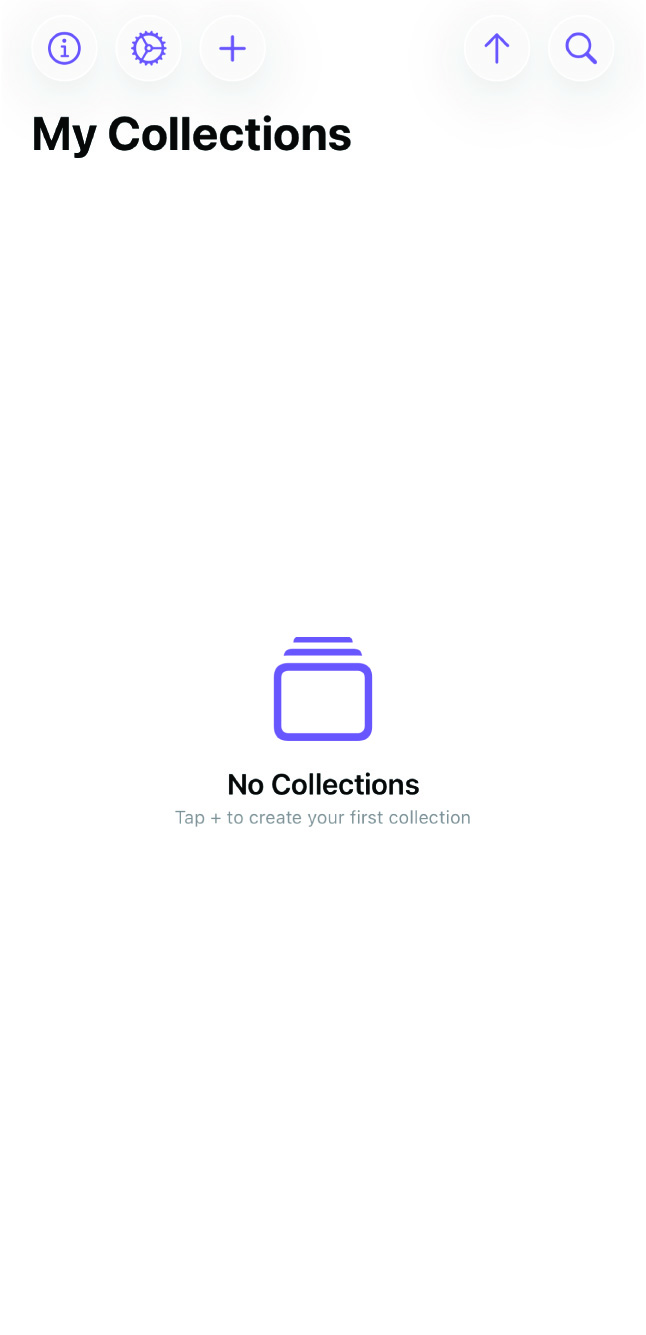
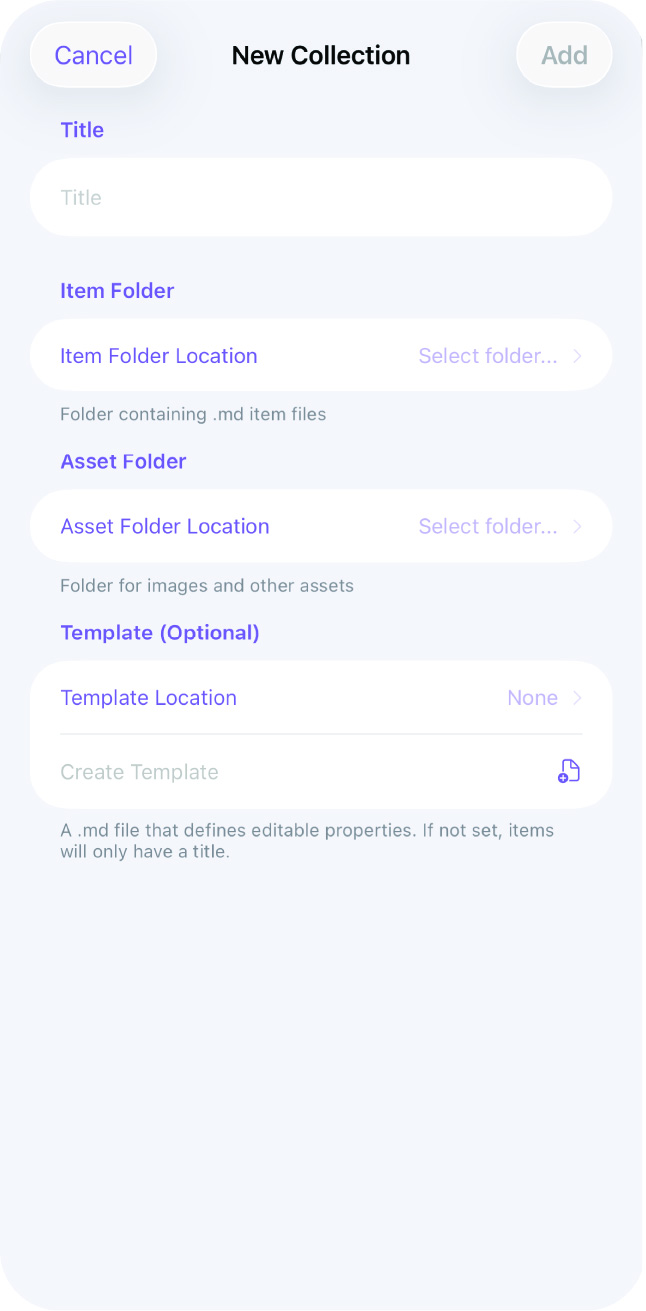
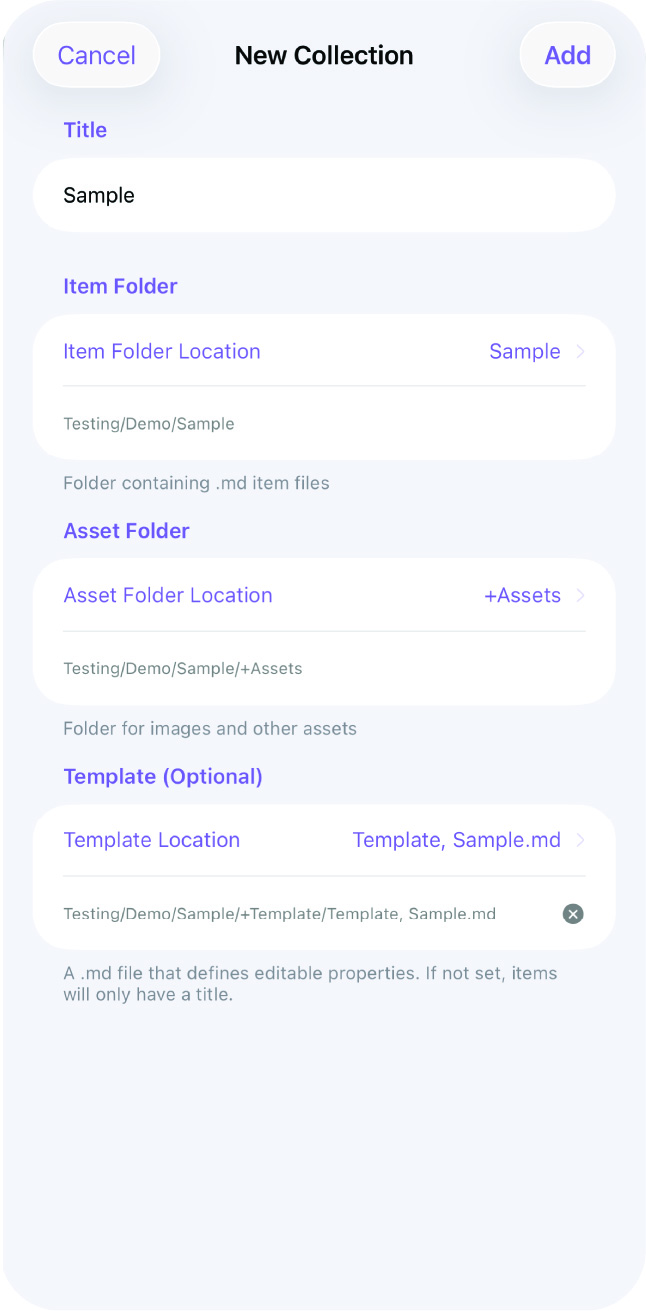
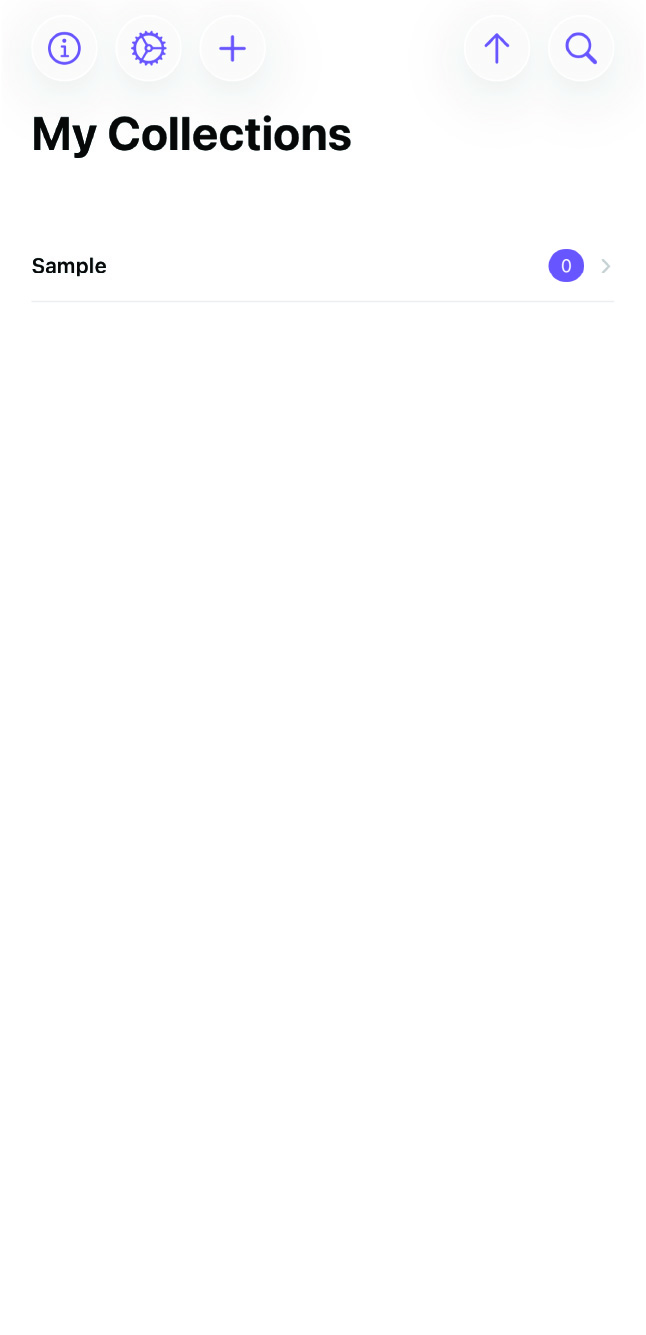
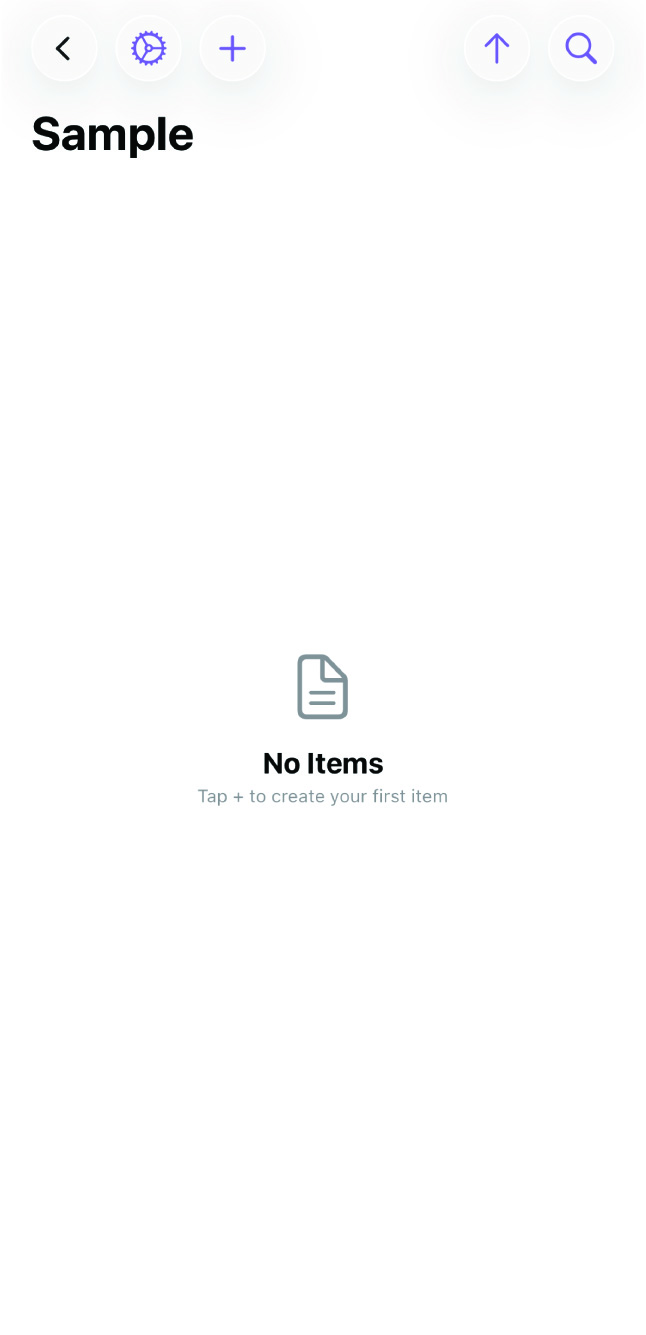
Once those are selected, the collection is created and you land on the collection settings screen.
Step 2: Configure Your Collection
Before adding items, set up the collection so it matches what you are tracking. This is where MDCollections becomes more useful than a generic note template.
Define Your Properties
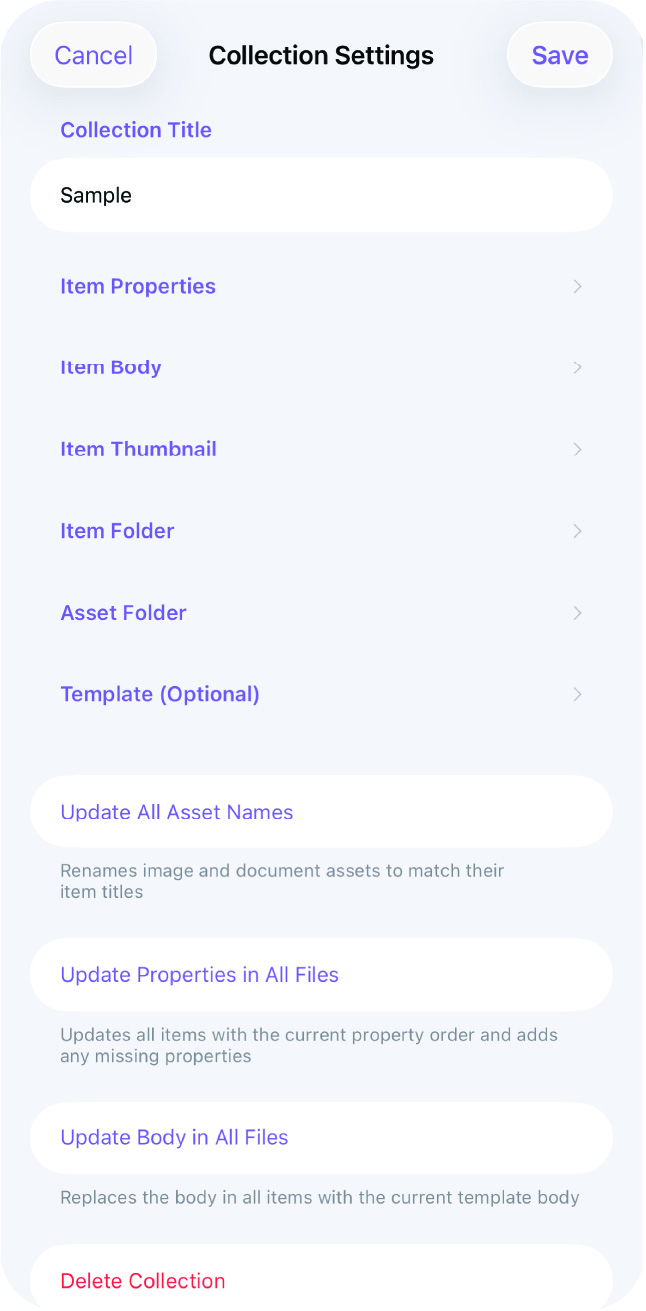
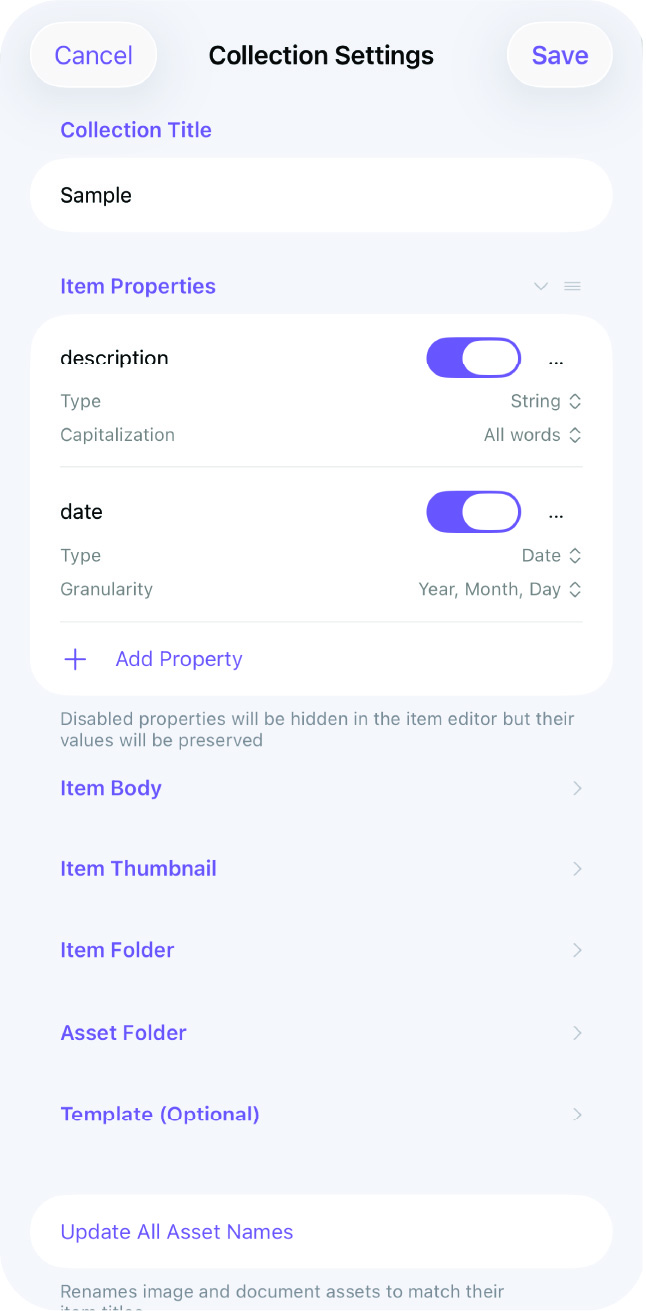
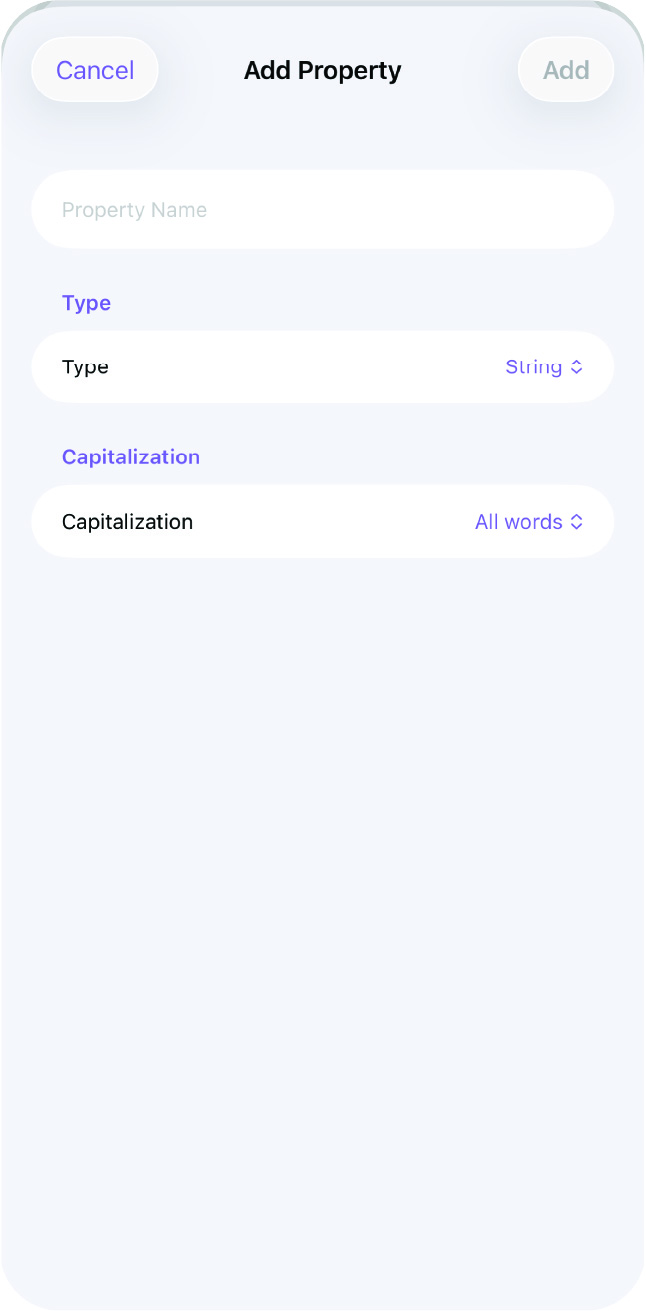
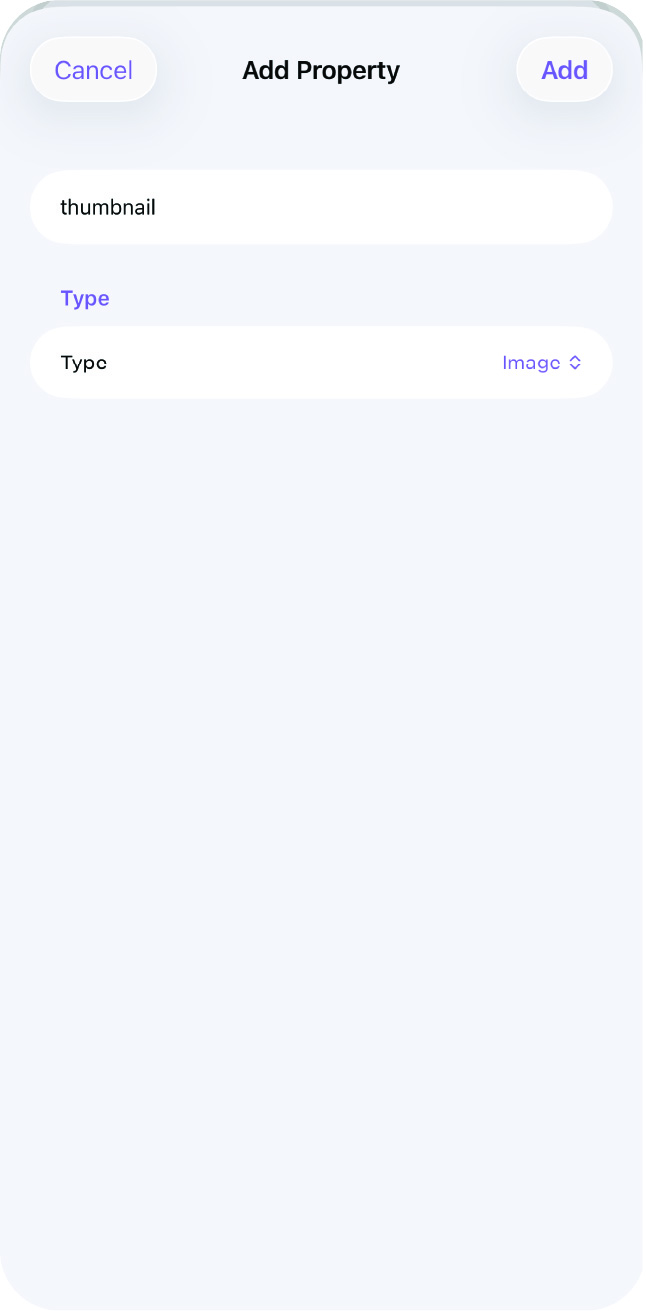
This is the most important step. Properties are the fields you will fill in for each item, such as name, brand, purchase date, condition, tags, images, or storage details.
Tap Add Property to create a field, then set the property type. Available types include text, numbers, dates, currency, tags, images, and more. The order you define here becomes the order used when viewing and editing items.
Set Up Your Template Body
Define a body template that will be copied into every new item. This is useful when you want each item to begin with a consistent structure for notes, inspection details, references, or anything else you capture repeatedly.
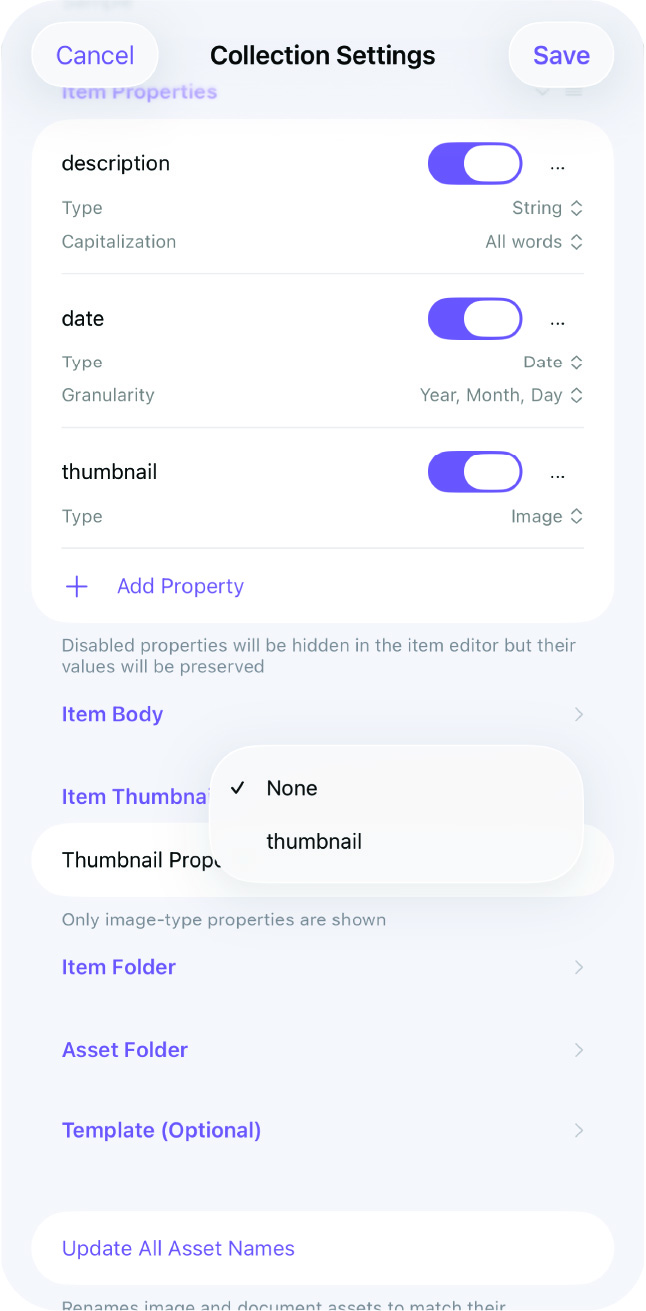
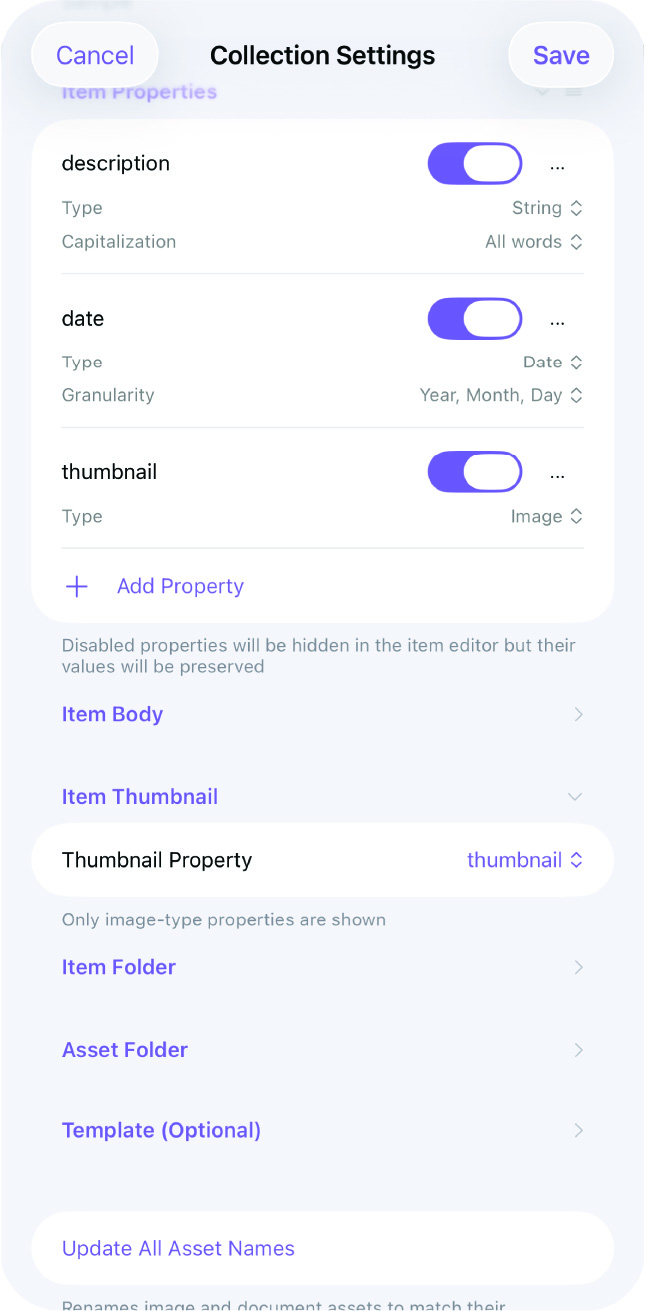
Choose Your Thumbnail Property
Pick which image property should generate thumbnails in list and grid views. This is usually the main photo or cover image.
Advanced settings
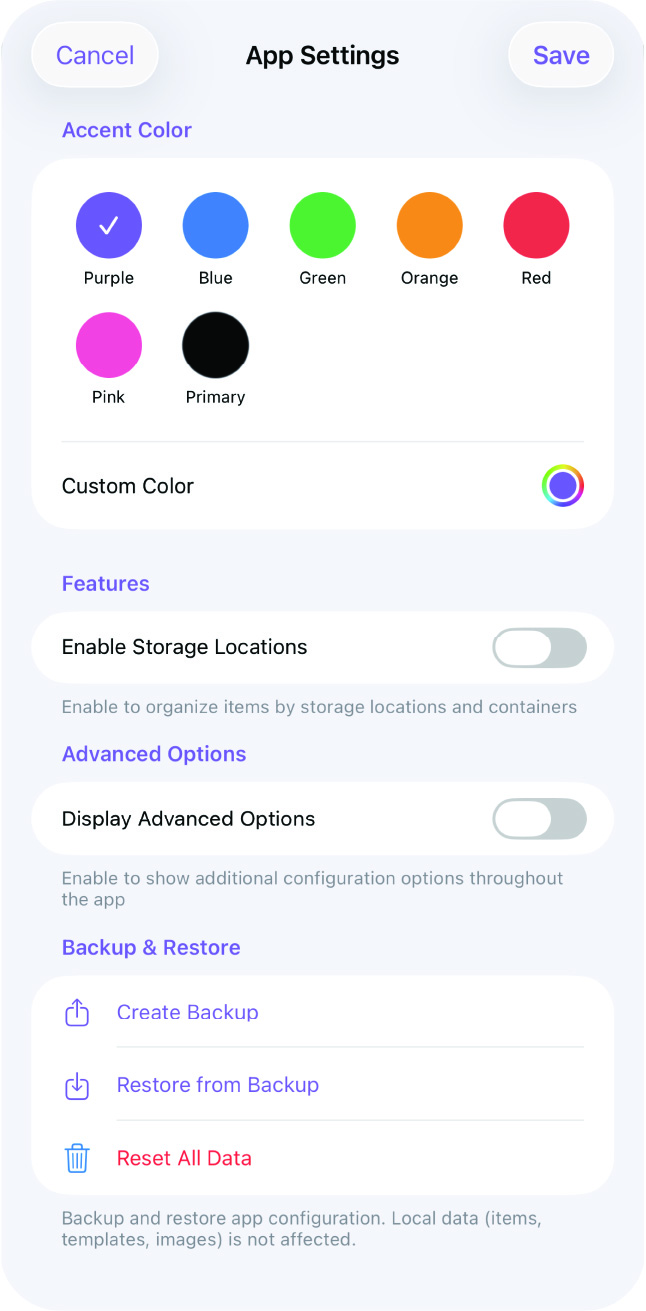
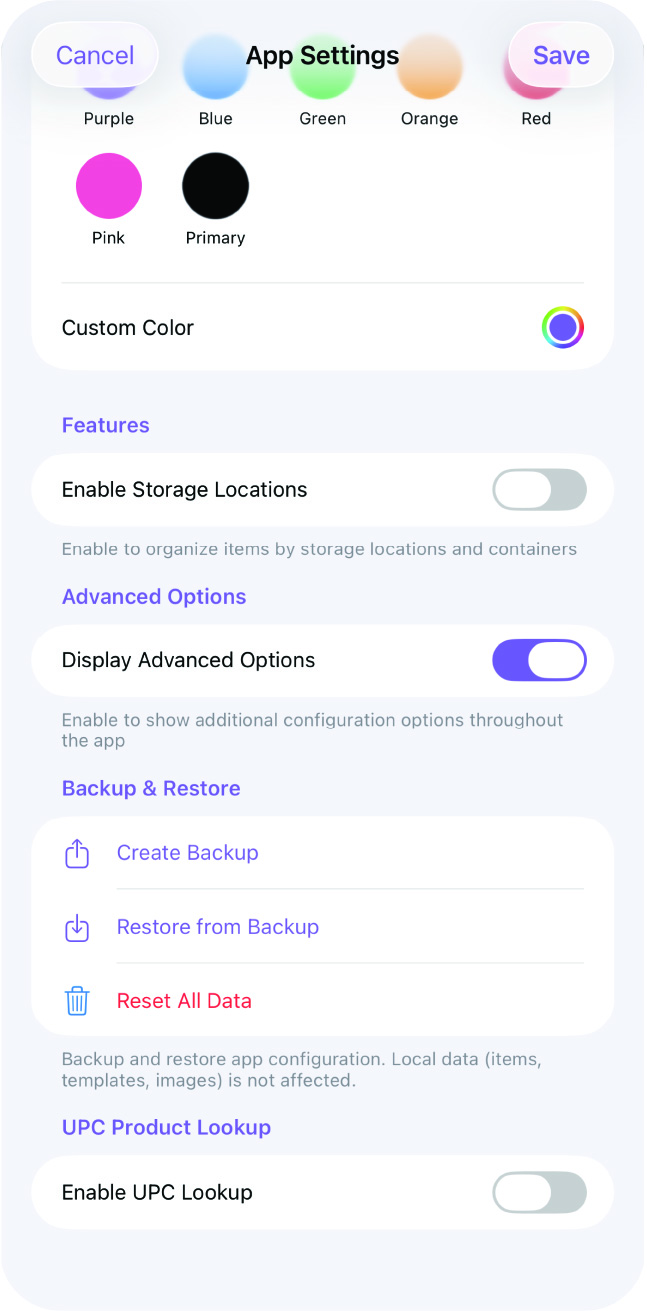
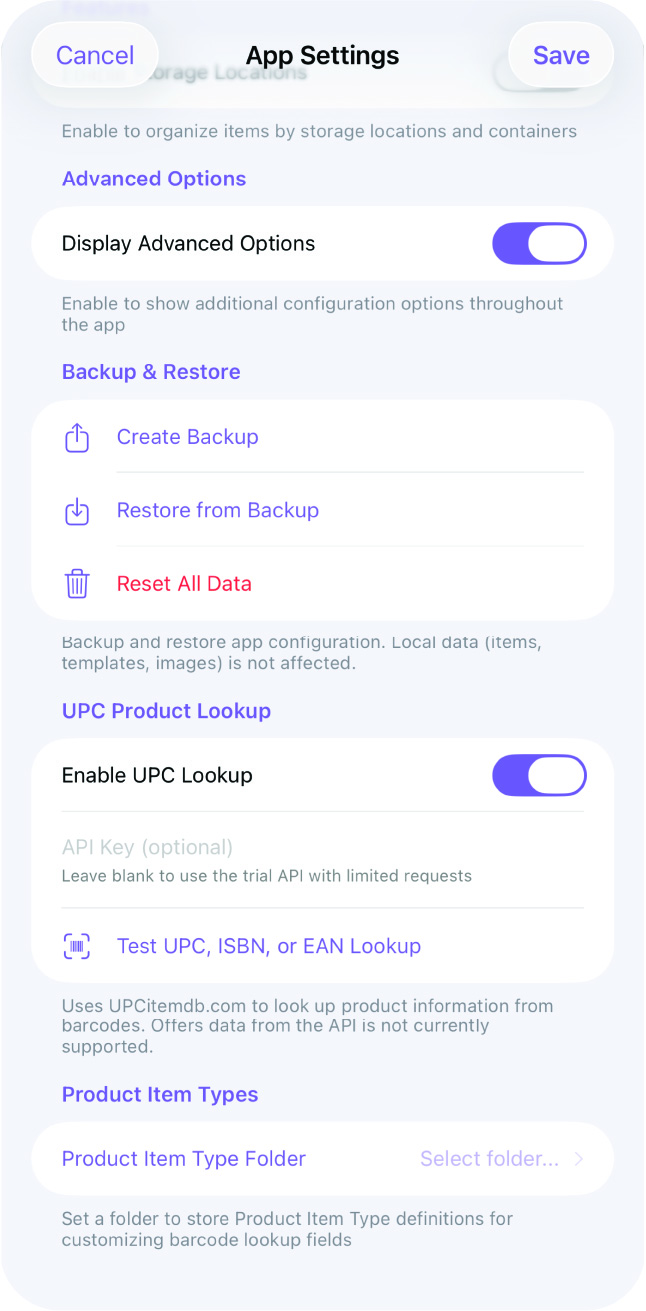
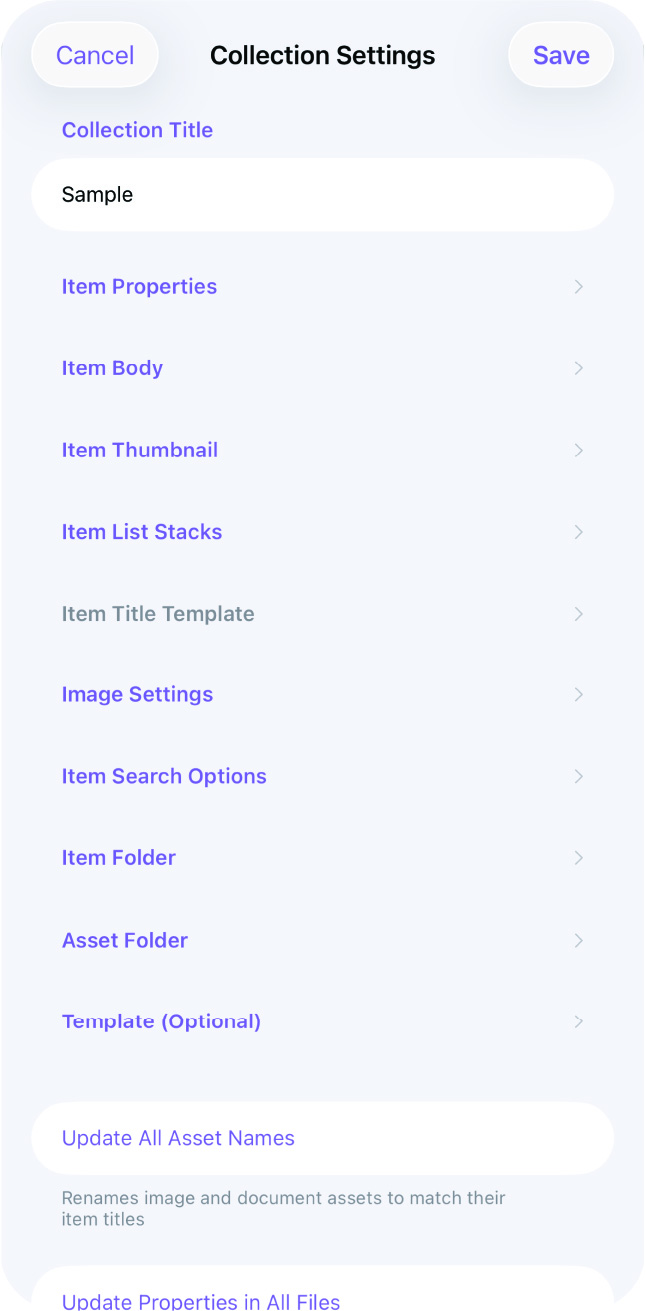
The basic configuration gets you a usable collection immediately. If you want deeper control, enable the advanced options in App Settings.
Configure View Stacks
Choose which properties can be used to group items into stacks. For example, you might group books by genre, games by platform, or tools by room.
Set a Title Template
Define a title template to generate consistent file names from properties. For example, a book collection might use {Author} - {Title} and a game collection might use {name} [{platform}].
Image Settings
Set the maximum size and quality for captured images. This helps keep the collection folder manageable if you photograph a lot of items.
Search Properties
Choose which properties are included in search. Item names are always searchable, but adding brand, tags, location, or description can make the collection much easier to use later.
Once the configuration looks right, press Save.
Step 3: Add Your First Item
With the collection set up, add your first item using the + button in the collection view.
You will see the properties you defined in the previous step, ready to be filled in. Enter the item details, add images if needed, and use the body section for notes or free-form information.
Press Save and the item becomes part of the collection as a Markdown file in the item folder you selected earlier.
What’s Next
From here, you can keep adding items and start tightening the workflow. The next useful guides are usually:
- Barcode scanning — scan product barcodes to auto-fill item details instead of typing them manually.
- Storage locations — track where each item is physically stored and print QR labels for containers.
- Custom views — group items by any property, switch between list and thumbnail views, and sort by different fields.
Your collection files remain standard Markdown throughout the process, so they stay accessible outside of MDCollections in Obsidian, a text editor, or any other Markdown-friendly tool.